

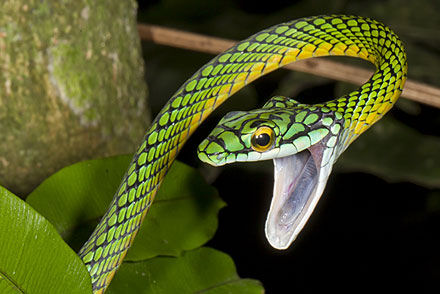
The new WCS assessment is based on the work of more than 50 scientists from WCS, Bolivian Fauna Collection, the Bolivian National Herbarium, the Amazon Conservation Association, and others. The park is known for its array of altitudinal gradients and habitats from lowland tropical forests of the Amazon to snow-capped peaks of the High Andes. Assembling the compendium of the park’s inhabitants took the scientists 15 years.
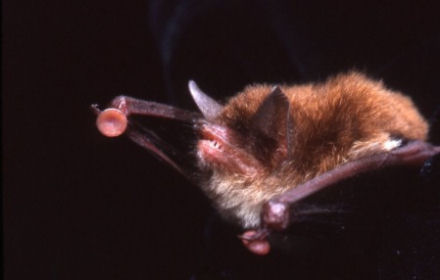

Still much is unknown about the park – particularly in the tropical montane or cloud forests between 3,280 and 9,842 feet. Despite significant efforts from the scientific team, two thirds of the park’s total biodiversity has yet to be formally registered or observed by scientists, highlighting the need for further research in the region.
Madidi National Park is one of the top tourist attractions in Bolivia and part of a larger protected region known as the Madidi-Tambopata Landscape. WCS has worked in this landscape since 1999 to develop local capacity to conserve the landscape and mitigate a variety of threats, including development such as road construction, logging, and agricultural expansion.
Related:
Discuss this article in our forum
Biodiversity backflip on warming climate
Bird poo and manta rays: nature’s intricate connectivity revealed
Wildlife extinction rates hugely over-reported
Source: Wildlife Conservation Society











Related posts:
 Could our beliefs about human consciousness and the notion of self be completely wrong?
 Work by celestial archaeologists hints at Earth’s ultimate fate
 Population growth makes wildlife conservation pointless, concludes new report
 Biologists hack cellular signaling to create eyes on-demand
 Living cell turned into a laser
 Stormy Times For Uranus