
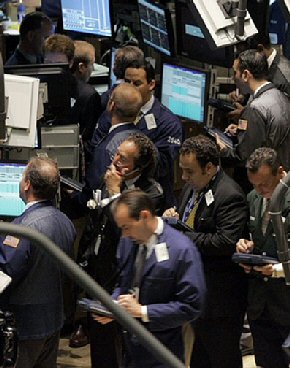
Higher levels of testosterone correlate strongly with financial risk-taking behavior, finds a new study in Evolution and Human Behavior that sheds light on the evolutionary function and biological origins of risk taking.
Undertaken by Anna Dreber and Coren Apicella, both from Harvard University, the study builds on previous work that demonstrated that stock market traders experienced greater profits on days their testosterone was above its median level. Now, this new study directly examines the relationship between testosterone and financial risk-taking. “Although our findings do not address causality, we believe that testosterone may influence how individuals make risky financial decisions,” said Apicella.
In the study, saliva samples were taken from a group of men aged 18 to 23 before their participation in an investment game. The researchers also assessed facial masculinity, associated with testosterone levels at puberty.
All of the participants were given $250, and were asked to choose an amount between $0 and $250 to invest. The participants kept the money that was not invested. A coin toss determined the investment’s outcome, and if the participant lost the coin toss, the money allocated to the investment was lost. However, if the coin toss was won, the participant would receive two and a half times the amount of their investment. At the end of the study, one person was selected by lottery to receive the cash amount of their investment, which created a monetary incentive for the participants.
The findings may help to explain the biological foundation of why some people are more inclined towards risk-taking than others, suggests Apicella. “Financial risk might be comparable to other risky male behaviors associated with reproduction,” she offers. “Men may be more willing to take financial risks because the payoffs, in terms of attracting mates, could be higher for them. This is because women value wealth more than men when choosing for a mate.”
Further research will examine changes in testosterone levels in response to financial wins and losses. “This will give us some insight into how changes in the market affect hormones, and in turn, affect decision-making,” says Apicella. Finally, the researchers are also exploring the role of genetics in explaining risk preferences. “Maybe we will be able to predict who becomes a trader,” muses Dreber.
Related:
Testosterone Apocalypse!
Testosterone Key In Disease Transmission
Pointing The Finger At Aggressive Men

















Comments are closed.