
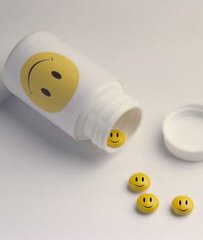
More drug catastrophes like the Vioxx disaster are inevitable, says Donald Light, a professor of comparative health policy at the University of New Jersey, who contends that the current system of FDA administered testing and approval in the United States is increasingly inadequate.
“Drug disasters are literally built into the current system of drug testing and approvals in the United States,” said Light, who presented his study at the annual meeting of the American Sociological Association. “Recent changes in the system have only increased the proportion of new drugs with serious risks.”
Astonishingly, adverse drug reactions are the fourth leading cause of death in the United States. The two million serious reactions that take place every year occur for a variety of reasons, including improper prescribed dosage, drug abuse and drug interactions. Light’s analysis identifies the organizational foundations of patient risk from prescription drugs and suggests institutional reforms to help avoid or reduce future drug disasters.
Light’s analysis suggests another flaw lies within the design of clinical trials. He contends that pharmaceutical companies frequently design their trials to minimize evidence of toxic side effects. To do so, they sample from a healthier population atypical of patients who will actually take the drug, excluding people who are older, poorer or who have multiple health problems. Trials are run long enough to pick up main effects but not to detect some long term side effects. Approvals are based on these data; so drugs with harmful effects sometimes get through.
“Based on our current system, the designation of ‘safe and effective’ on today’s new drugs could be replaced with, ‘apparently safe based on incomplete information, and more effective than a placebo,'” Light said.
Light cites serious under-funding of the FDA, which creates a dependency on the pharmaceutical industry – the industry FDA regulates – to pay its staff. In return for drug company funding, Light says, the industry expects faster reviews, but faster reviews potentially fail to identify serious long-term side effects.
“Speed-up reviews for safety have more than tripled the number of ‘black box warnings’ of side effects or withdrawals after drugs are on the market,” Light said. “Despite recent reforms to strengthen the FDA’s role in protecting the public from harmful drugs, the harm-benefit ratio is worsening due to these reviews and relaxed rules that allow companies to promote drugs for unapproved uses.”
Related:
Noises Off At The Patent Law Medicine Show
Medicos Mull Advantageous Drug-Food Interactions
Doctors Outline Policy To Prevent Genetic Discrimination
Going ‘Postal’ On Placebos
Source: American Sociological Association
Related posts:
 E. coli outbreak leads to massive flour recall
 Report Pooh-Poohs Corn Biofuels
 Bionic plants created with carbon nanotubes
 Recent discovery of quantum vibrations in brain neurons lends weight to his controversial theory of consciousness, says Sir Roger Penrose
 Quitting The Hard Way
 Oxytocin Touted As Autism Treatment









Comments are closed.