
Patients undergoing chemotherapy frequently complain of neurological side-effects such as short-term memory loss and, in extreme cases, seizures, vision loss, and even dementia. A previous study by researchers at the University of Rochester showed that upwards of 82 percent of breast cancer patients reported that they suffer from some form of cognitive impairment.
“This study is the first model of a delayed degeneration syndrome that involves a global disruption of the myelin-forming cells that are essential for normal neuronal function,” said Mark Noble, director of the University of Rochester Stem Cell and Regenerative Medicine Institute and senior author of the study. “Because of our growing knowledge of stem cells and their biology, we can now begin to understand and define the molecular mechanisms behind the cognitive difficulties that linger and worsen in a significant number of cancer patients.”
Two years ago, Noble and his team showed that three common chemotherapy drugs used to treat a wide range of cancers were more toxic to healthy brain cells than the cancer cells they were intended to treat. While these experiments were among the first to establish a biological basis for the acute onset of chemo brain, they did not explain the lingering impact that many patients experience.
In the most recent experiments, Noble exposed both individual cell populations and mice to doses of 5-FU in amounts comparable to those used in cancer patients. 5-FU is among a class of drugs called antimetabolites that block cell division and has been used in cancer treatment for more than 40 years. The researchers discovered that months after exposure, specific populations of cells in the central nervous – oligodendrocytes and dividing precursor cells from which they are generated – underwent such extensive damage that, after 6 months, these cells had all but disappeared in the mice.
Oligodendrocytes play an important role in the central nervous system and are responsible for producing myelin, the fatty substance that, like insulation on electrical wires, coats nerve cells and enables signals between cells to be transmitted rapidly and efficiently. Without a healthy population of oligodendrocytes, the membranes cannot be renewed and eventually break down, resulting in a disruption of normal impulse transmission between nerve cells.
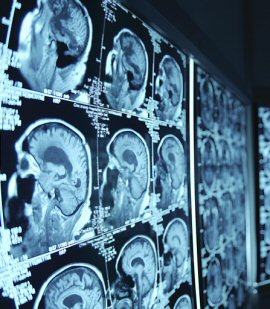
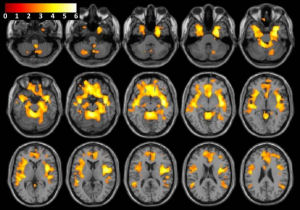
These findings parallel observations in studies of cancer survivors with cognitive difficulties. MRI scans of these patients’ brains revealed a condition similar to leukoencephalopathy. This demyelination – or the loss of white matter – can be associated with multiple neurological problems. Noble says that not all cancer patients experience these cognitive difficulties, and determining why some patients are more vulnerable may be an important step in developing new ways to prevent these side effects.
Related:
Pharmacologists Confirm Chemo’s Brain Damaging Effects
When Thinking Can Be Toxic
Shampoo Washes Neurons Down The Drain
















Comments are closed.