
Scientists from Wake Forest University School of Medicine (WF) have discovered that in autistic individuals, connections between brain cells may be deficient within single regions, and not just between regions, as was previously believed.
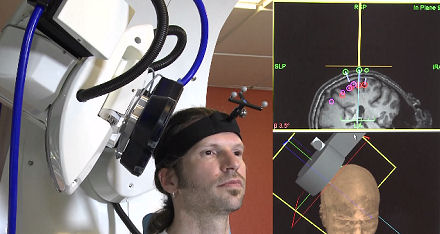
Using magnetoencephalography brain imaging technology to measure brain electrical activity, UF’s Tony Wilson administered a test called the 40 hertz auditory steady-state response test. The test measures electromagnetic wave cycles and indicates brain cell discharges at the 40 hertz frequency. “This test measures the brain’s capacity to mimic what it’s hearing. A healthy brain’s cells will fire back at 40 hertz,” said Wilson. “We chose this test because it is a robust metric of how well individual circuits are functioning.”
The experiment, reported in Biological Psychiatry, involved a group of 10 children and adolescents with autism, and 10 without autism, listening to a series of clicks occurring every 25 milliseconds for a duration of 500 ms. The scientists measured the brain’s responses to these clicks.
In the auditory area of the left hemisphere, the group without autism delivered a brain response to the 40 hertz stimulation 200 ms after it began. However, the group with autism failed to respond entirely at the same 40 hertz frequency.
“Our results made sense. Both anecdotal and behavioral evidence suggests children with autism have significantly disturbed brain circuits on the local-level within an individual brain area,” said Wilson. “For example, they tend to restrict their visual gaze to a part of someone’s face, like a nose or an eye, but not the person’s whole face.”
The results also support previous research that showed disconnections between two or more brain regions, known as long-range connectivity. This new study shows that disconnection in long-range connectivity may actually start within individual brain regions, known as local connectivity.
Related articles:
Autism, Asperger’s and Evolution
Personality Encoded In Junk DNA
Mirror Neurons Show Their Xenophobic Side
The Information Insurgency
Source: Wake Forest University School of Medicine
Related posts:
 Scientists discover “idiosyncratic” brain patterns in autism
 Scans reveal frenzied activity inside the autistic brain
 Researchers tracking autism’s roots
 Musicians’ brains optimized to identify emotion
 Scientists demo first direct brain-to-brain communication between humans
 Ovulation goggles make Mr Wrong look like Mr Right









Comments are closed.