
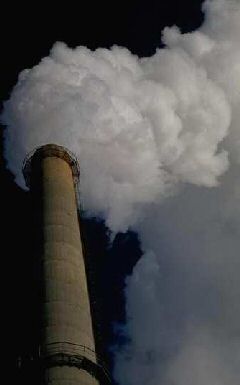
The global warming debate has until now focused almost entirely on carbon dioxide and other greenhouse gas emissions, but scientists at the University of California – Irvine, suggest that a lesser-known problem – dirty snow – could explain the Arctic warming attributed to greenhouse gases.
Dirty snow is created when particulate matter from exhausts, smoke stacks, land use and forest-fires enters the atmosphere and infuses snow. Because dirty snow is darker than natural snow, it absorbs more sunlight and heat.
Writing about their findings in the Journal of Geophysical Research, the researchers explained that dirty snow has had a significant impact on climate warming since the Industrial Revolution. UCI scientist Charlie Zender said that in the past 200 years, the Earth has warmed by about 0.8 degrees Celsius and he contends that up to 20 percent of this rise could be attributed to dirty snow.
Past studies have analyzed dirty snow’s effect on climate, but this is the first to take into account realistic emission levels from forest fires in the Northern Hemisphere and how warming affects the thickness of the snow pack.
Zender explains that dirty snow is potentially much more of a threat to Arctic areas than greenhouse gases, levels of which have increased by one-third in the last two centuries. “A one-third change in concentration is huge, yet the Earth has only warmed about 0.8 degrees because the effect is distributed globally,” Zender said. “A small amount of snow impurities in the Arctic have caused a significant temperature response there.”
A feedback mechanism whereby dirty snow causes melting which exposes underlying soil that is significantly darker than the snow exacerbates the warming further. This cycle causes temperatures in the polar regions to rise as much as 3 degrees Celsius during some seasons, according to the study. “Once the snow is gone, the soot that caused the snow to melt continues to have an effect because the ground surface is darker and retains more heat,” Zender said.
Zender believes policymakers could use these research results to develop regulations to limit industrial soot emissions and begin switching to cleaner-burning fuels that would leave snow brighter. New snow falls each year, and if it contained fewer impurities, the ground would brighten and temperatures would cool.
Related articles:
Tundra In Retreat
Petite Nuke Exchange Could Derail Global Climate
Developing World Antes Up In Greenhouse Game
Arctic Soil Carbon Vastly Underestimated














Comments are closed.