
The fragile and complex nature of ocean ecosystems is becoming ever more apparent as scientists uncover new relationships between diverse marine creatures.
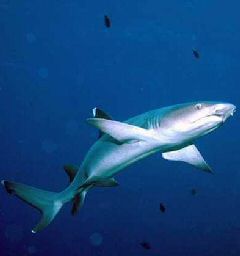
Back in 2003, scientists found big declines in the numbers of great shark (bull, great white, dusky and hammerhead) species in the northwest Atlantic. Now, according to University of Miami and Dalhousie University researchers, the drop in large shark numbers may mean that scallops and other shellfish will be harder to find.
The study, published in Science, found that overfishing the largest predatory sharks along the Atlantic Coast of the United States has led to an explosion of their ray, skate, and small shark prey species. “With fewer [large] sharks around, the species they prey upon – like cownose rays – have increased in numbers, and in turn, hordes of cownose rays dining on bay scallops, have wiped the scallops out,” says study co-author Julia Baum.
Ecologists have long predicted that the demise of top predators could trigger destructive consequences. Researching such effects, however, has been challenging and the researchers believe this is the first study to demonstrate that the loss of sharks is cascading through ocean ecosystems and inflicting collateral damage on food fisheries such as scallops.
In tandem with plummeting great shark populations, numbers of rays, skates, and smaller sharks have increased considerably, with an average population increase of about eight percent per year. Rays, which can grow to be more than four feet across, eat large quantities of bivalves, including bay scallops, oysters, soft-shell and hard clams.
The study notes that a more holistic ecosystem-based approach to fisheries management is clearly needed, but the real challenge, according to co-author Travis Shepherd, is to; “move beyond retrospective analyses and instead prevent ecosystem-wide changes from happening in the first place.”
“This ecological event is having a large impact on local communities that depend so much on healthy fisheries,” added study co-leader Charles Peterson. “Maintaining the populations of top predators is critical for sustaining healthy oceanic ecosystems. Despite the vastness of the oceans, its organisms are interconnected, meaning that changes at one level have implications several steps removed.”
Related articles:
Threat From Plummeting Biodiversity Qualified
Prozac In Wastewater Threatens Mussels
Evolution Makes A Mockery Of Fishing Policy
Cod Numbers Decline 96 Percent











Comments are closed.