
The behavior of two of Greenland’s largest glaciers underlines the problem in assuming that glacial melting and sea level rise will occur at a steady upward pace, reports a new study inScience. Between 2004 and 2005, the two glaciers in question shrank dramatically and dumped twice as much ice into the sea as had been observed previously. Then, less than two years later, they returned to their previous slower rates of discharge.
“While the rates of shrinking of these two glaciers have stabilized, we don’t know whether they will remain stable, grow or continue to collapse in the near future,” said the study’s lead author, Ian Howat. One of the issues confounding Howat, and his team from the University of Washington, is that the glaciers have dramatically changed shape, becoming stretched and thinned.
“Our main point is that the behavior of these glaciers can change a lot from year to year, so we can’t assume to know the future behavior from short records of recent changes,” explains Howat. “Future warming may lead to rapid pulses of retreat and increased discharge rather than a long, steady drawdown.”
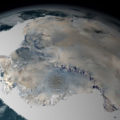
Climatologists agree that getting accurate computer models of glacier behavior in Greenland and Antarctic is important because they contain 99 percent of the Earth’s glacial ice, second only to the oceans as the largest reservoir of water on the planet.Previous findings showed that Greenland’s glaciers had doubled their discharge between 2000 and 2005, but these results were based on “snapshots” of discharge taken five years apart. “Did an equal amount of discharge occur every year? Did it happen all in one year? Is there a steady upward trajectory? We didn’t know,” Howat said.
Howat says that what his team learned is that the shape of these two glaciers changed as they surged toward the sea, changes that appeared to put the brakes on. The glaciers lost ice as their front edges began calving, became lighter and floated off the bottom, which led to more ice breaking off as the ice was buoyed up by water. The fronts stabilized once the ice had retreated to shallower parts of the fjords and again rested on the bottom.
The team also found that the pace toward the sea was faster at the front edge of the glaciers than farther up the mountain. This caused the glaciers to thin, stretch and weigh less overall, which also slowed them down. “All this in a matter of a few short years for these two glaciers is not the way glaciologists are used to thinking,” Howat mused. “We’re used to thinking of the ice sheets in terms of millennia or centuries.”









Comments are closed.