
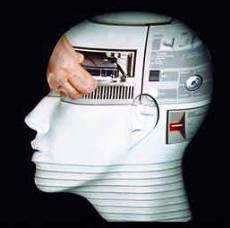
The first case study of a blind man suffering déjà vuhas overturned traditional theories about how the effect occurs. It was previously thought that déjà vuwas triggered when images from one eye arrived in the brain a few microseconds after images from the other eye – causing a feeling that something was being seen for the second time. But University of Leeds researchers have just reported about a blind person experiencing déjà vu through smell, hearing and touch.
Researchers Akira O’Connor and Chris Moulin, from the university’s Institute of Psychological Sciences have just had their paper on non-visualdéjà vu published in the journal Brain and Cognition. In the article, they discuss how mundane experiences – undoing a jacket zip while hearing a particular piece of music; hearing a snatch of conversation while holding a plate in the school dining hall – triggereddéjà experiences in the blind subject.
The researchers hope to work with other visually impaired people, to assess how common the effect is. They’d also like to take the research further: “It would be really neat to do some neuro-imaging on people during genuine spontaneous déjà vu experiences – but it’s very difficult to get them to have them on demand,” mused O’Connor.
O’Connor is also experimenting with the induction of déjà vu through hypnosis. “We now believe that déjà experiences are caused when an area of the brain that deals with familiarity gets disrupted,” he said. In one experiment, subjects were asked to remember words, then hypnotized to make them forget the words – and then shown the same word again to induce a feeling that they have seen it before. Around half said this brought on a sensation similar to déjà vu.











Comments are closed.