
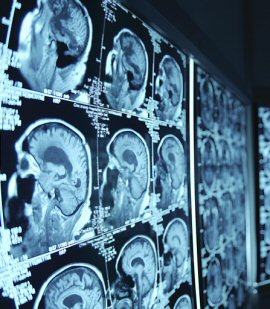
The latest issue of Pharmacology, Biochemistry and Behavior confirms what many chemotherapy patients have long suspected; chemotherapy addles the brain. Led by Dr. Gordon Winocur, of the Baycrest Research Centre for Aging and the Brain, the new study confirmed that “chemobrain” is indeed a real side-effect of the treatment, causing a decline in memory and other cognitive functions.
Previous studies have produced mixed results in confirming chemobrain’s existence. Dr. Winocur cited small samples, less than adequate controls and failure to account for other factors, as the main issues. In the new study, healthy female mice received standard doses of methotrexate and 5-fluorouracil, two drugs widely used to prevent the recurrence of breast cancer. A control group of mice received a saline solution.
After three weeks, the mice were put through a series of spatial/non-spatial memory tests and conditional rule learning tests in a water maze. The drug treatment group scored lower on the spatial memory task (hippocampus) and the task requiring strategic and working memory components (frontal lobes).
“This indicates that the adverse effects of this treatment regimen of methotrexate and 5FU probably do not extend to all regions of the brain. It appears that the hippocampus and frontal lobes are primarily affected,” said Dr. Winocur. He quantified the learning and memory deficits related to treatment as being in the mild to moderate range. “That the deficits were relatively small is encouraging. It’s important that cancer patients know that if they experience mild to moderate impairments in their cognitive functions, this level of change is potentially manageable.” Dr. Winocur noted that the study assessed only the short-term effects of the drugs and there was a possibility there might have been some recovery of cognitive function over time.















Comments are closed.