
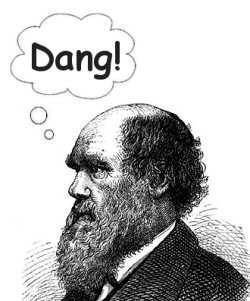
The New York Academy of Sciences Readers & Writers lecture series will play host to biologists Marc Kirschner and John Gerhart on January 25, where they will reveal what they consider to be the answer to one of evolutionary theory’s most puzzling questions. If their theory – that explains seemingly random genetic change – passes muster, they will have successfully filled one of the biggest gaps in evolutionary theory, the gap that has recently been exploited by intelligent design (ID) advocates. Kirschner and Gerhart’s theory is covered in detail in their book The Plausibility of Life: Resolving Darwin’s Dilemma.
Since its publication a century and a half ago, Darwin’s theory of evolution has explained how natural selection winnows out the mutations most helpful in allowing a species to survive.
Kirschner and Gerhart propose that their new theory, “facilitated variation,” provides an original solution to this longstanding puzzle of random genetic change. They show how the deep molecular biology of the cell actually fosters biological novelties when plants and animals need them most, not merely when random chance generates them. “The key is the way the organism is constructed, so that random genetic variation does not produce random phenotypic variation and the type of non-random phenoytpic variation is related to physiological variation, the kind of thing the animal uses every day to respond to the environment,” explained Kirschner.
By closing this gap in Darwin’s theory, Kirschner and Gerhart provide a timely scientific rebuttal to modern critics of evolution who champion “intelligent design.” After surveying the latest genetic research, the researchers came to a surprising conclusion: complex living systems are plausible only if evolution can generate them, and it is actually life by design that is implausible.
Kirschner’s presentation is part of the New York Academy of Sciences’ Readers & Writers lecture series, which highlights the latest and most important science books for the benefit of the press and public. Founded in 1817, the New York Academy of Sciences is an independent, non-profit organization of more than 24,000 members serving science, technology and society worldwide.
Dr. Kirschner will discuss the book, The Plausibility of Life: Resolving Darwin’s Dilemma, on Wednesday, January 25 from 6 to 7 p.m., at New York Academy of Sciences headquarters, 2 East 63rd Street.





Comments are closed.